

Introduction
After a part is machined to the correct dimensions, the next crucial step is choosing the right surface finish. The finish you select affects appearance, corrosion resistance, durability, friction, and even how the part performs in real-world applications. From basic machining marks to mirror-polished surfaces and industrial coatings, the right finish can greatly enhance both function and longevity.
This guide breaks down the most common CNC surface finishes, how they’re applied, and how to choose the best one for your project.
1. As-Machined Finish (Standard)
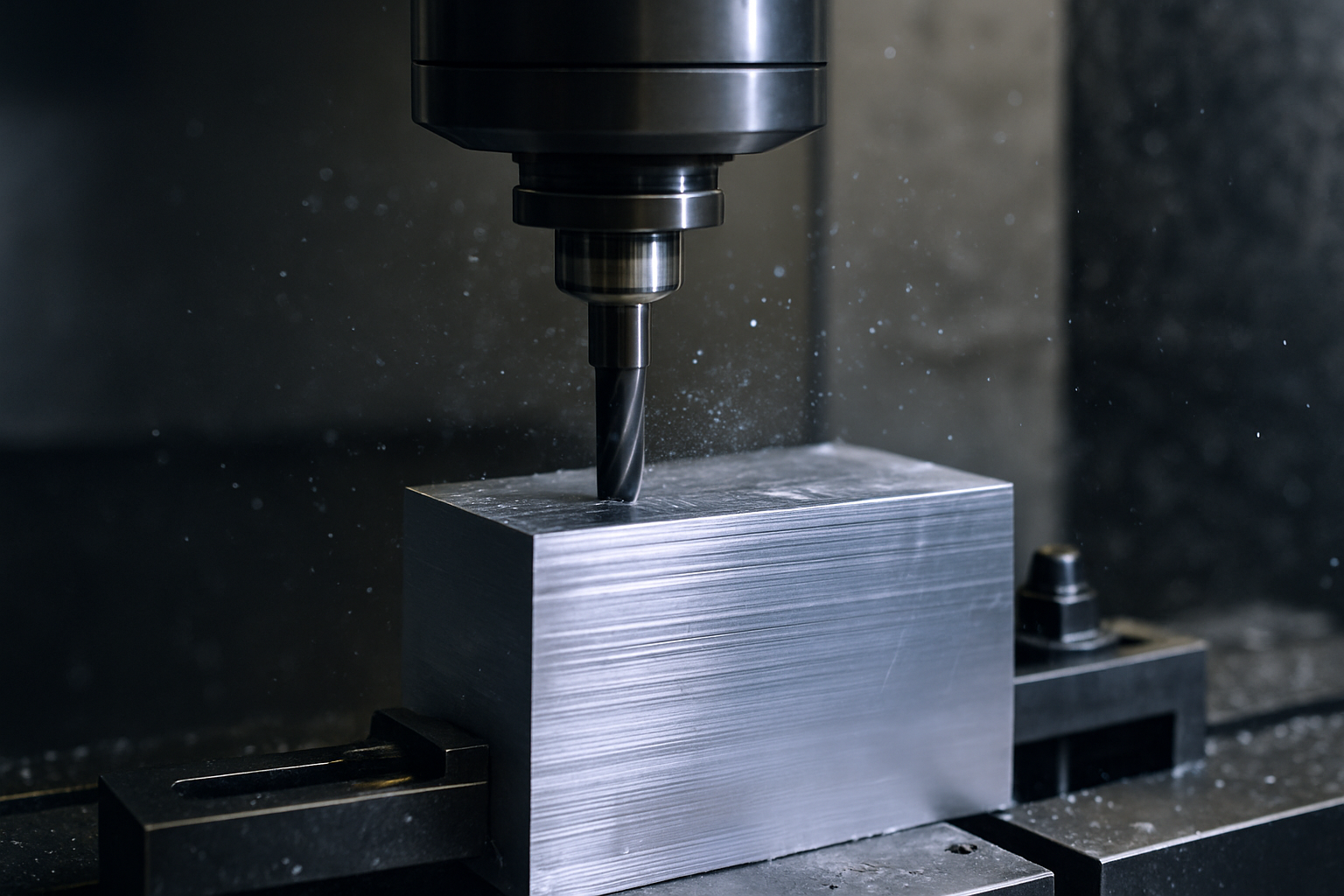
Appearance: Visible tool marks, matte sheen
Best for: Internal components, prototypes, non-cosmetic parts
The simplest and most economical finish. Parts come directly off the CNC machine with standard toolpath marks.
Benefits:
No additional cost
Fast turnaround
Good for functional parts that don’t need cosmetic appeal
2. Bead Blasting
Appearance: Smooth, matte, uniform texture
Best for: Consumer products, housings, visual prototypes
Bead blasting uses pressurized glass beads to remove tool marks and create a consistent satin finish.
Benefits:
Excellent for anodizing prep
Hides machining marks
Gives a premium, professional look
3. Anodizing (Type II & Type III Hardcoat)
Appearance: Colored or natural matte coating fused to surface
Best for: Aerospace, electronics, consumer products, wear-resistant parts
Type II (Standard Anodizing):
Decorative and corrosion-resistant
Available in colors (black, silver, red, blue, gold, etc.)
Type III (Hardcoat):
Much thicker, harder, and more durable
Ideal for high-wear environments
Benefits:
Corrosion and abrasion resistance
Increased surface hardness
Lightweight coating that doesn’t peel
4. Powder Coating
Appearance: Thick, colorful protective coating
Best for: Industrial equipment, brackets, enclosures
Powder coating creates a durable, uniform finish with excellent impact resistance.
Benefits:
Wide color range
Very durable
Great for steel and aluminum parts
5. Polishing (Brushed or Mirror)
Appearance: Smooth brushed texture or reflective mirror finish
Best for: Decorative components, consumer products, medical devices
Polishing removes imperfections and tool marks for a visually refined surface.
Types:
Brushed: Linear grain texture
Mirror: Highly reflective, near-perfect smoothness
6. Plating (Nickel, Chrome, Zinc)
Appearance: Metallic layer added to part surface
Best for: High-wear components, corrosion-prone environments
Common types:
Electroless Nickel: Uniform hardness, chemical resistance
Chrome Plating: High hardness and wear resistance
Zinc Plating: Corrosion protection for steel
7. Black Oxide
Appearance: Smooth black matte finish
Best for: Steel components needing mild corrosion protection
Black oxide adds a thin, dark coating that enhances appearance and reduces light reflection.
8. Powdered or Painted Finishes
Appearance: Uniform color coating, matte or glossy
Best for: Larger components or branding-specific parts
Paint is less durable than powder coating but ideal when color customization is needed.
How to Choose the Right Finish
Consider:
Appearance requirements
Wear resistance
Corrosion exposure
Material type
Budget
Production timeline
Each finish can dramatically change performance and cost, so it's essential to choose one aligned with your application.
Work With Your Machinist Early
Surface finishes may affect tolerances, material choice, and machining strategy. At Universal Machining & Engineering, we help customers choose the perfect finish to enhance both performance and aesthetics.
Conclusion
Surface finishes do more than improve appearance—they protect, strengthen, and extend the lifespan of machined parts. Choosing the right finish ensures your part performs exactly as intended.
Need Help Selecting the Right Surface Finish?
Our team can recommend the best finish or coating for your part’s environment, function, and budget.
